
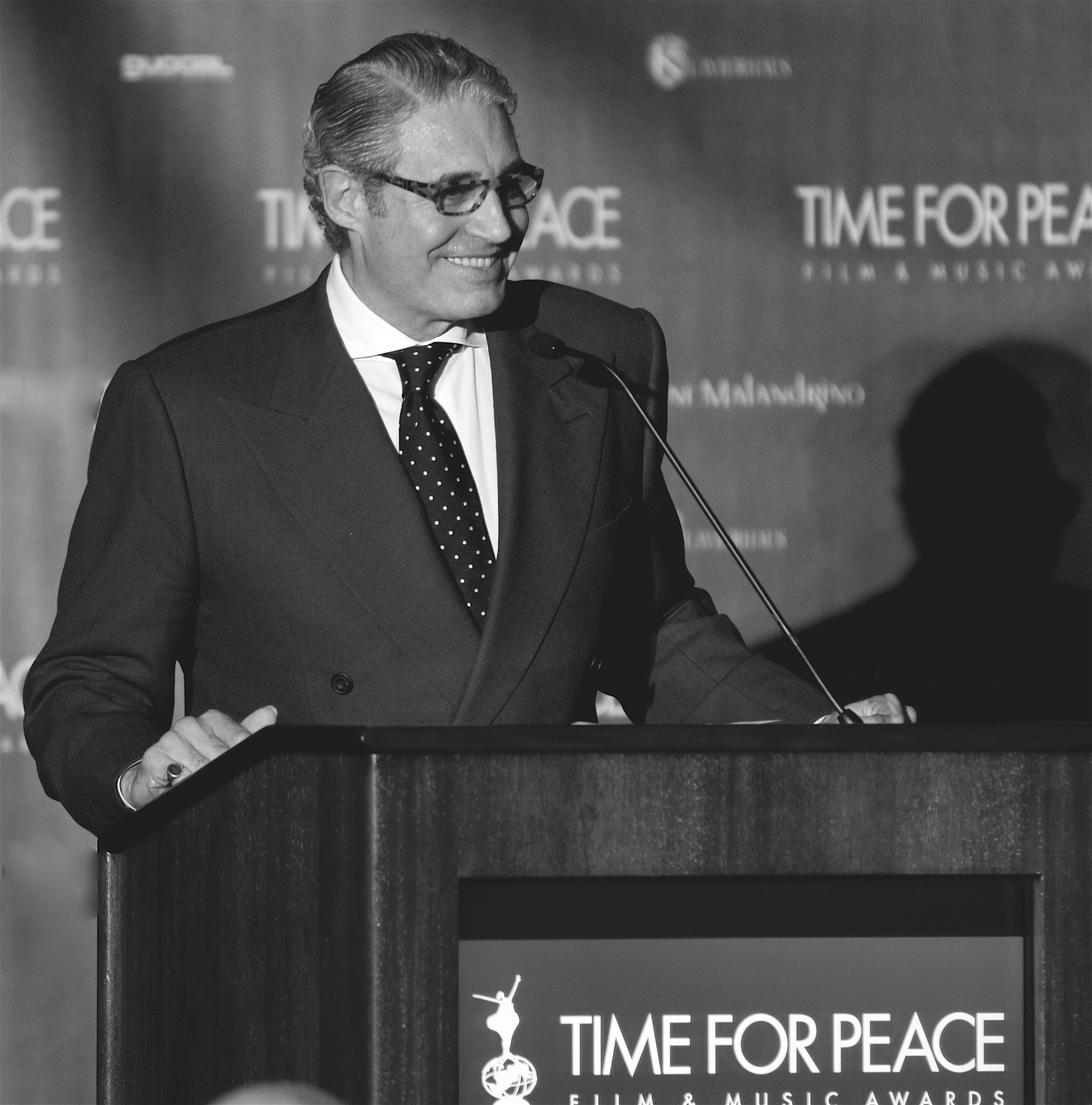
TIME FOR PEACE FILM & MUSIC AWARDS
FRENCH DOCUMENT
WHEN ART HELPS US SEE ONE ANOTHER DIFFERENTLY
Founded in New York in 1994 by Marion and Robert Einbeck, the Time for Peace Film & Music Awards were created from a simple conviction: artistic excellence can move us, but certain works do something more — they deepen our understanding of one another and remind us of what we share as human beings.
From cinema to music, Time for Peace has sought to recognize artists and works whose creative freedom and artistic achievement open a space for dignity, empathy, understanding and peace.
The Awards were never created to tell artists what to say, or audiences what to think.
They were created to recognize those moments when artistic freedom and human consciousness meet.
A DIFFERENT KIND OF AWARD
From the beginning, Time for Peace brought together two principles that remain inseparable: artistic excellence and humanistic resonance.
The Time for Peace Film & Music Awards were not created to honor an artist simply for who he or she was, for celebrity, public stature or personal engagement. They recognized a work — a film, a performance, a screenplay, a composition or a song — and the human experience carried through it.
Artistic excellence came first: the strength of a film, its direction, writing and interpretation; the power of a composition, a voice or a musical creation. Then came another question: What does this work leave within us after the screen goes dark or the music ends?
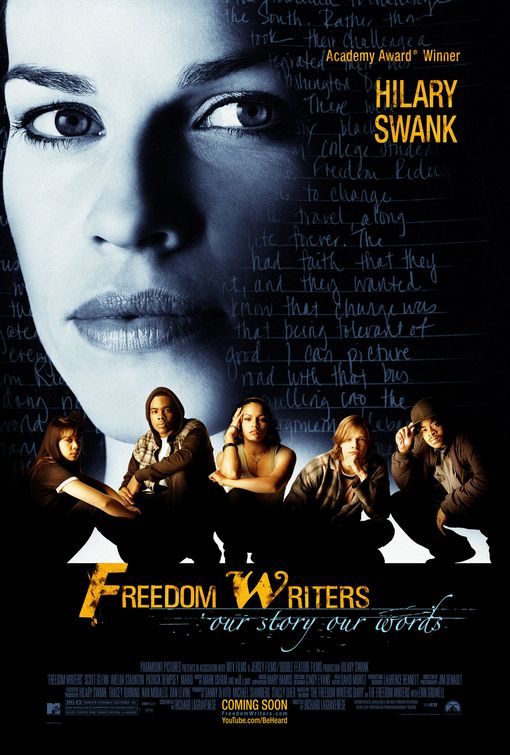
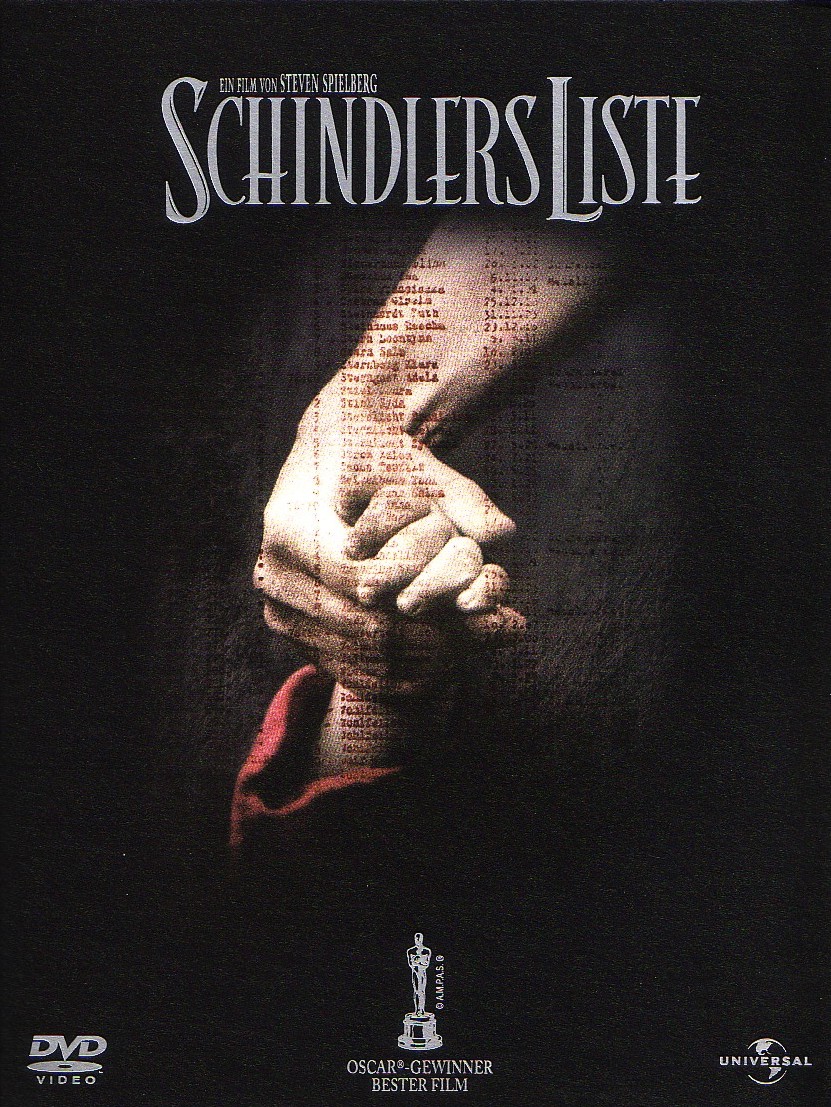
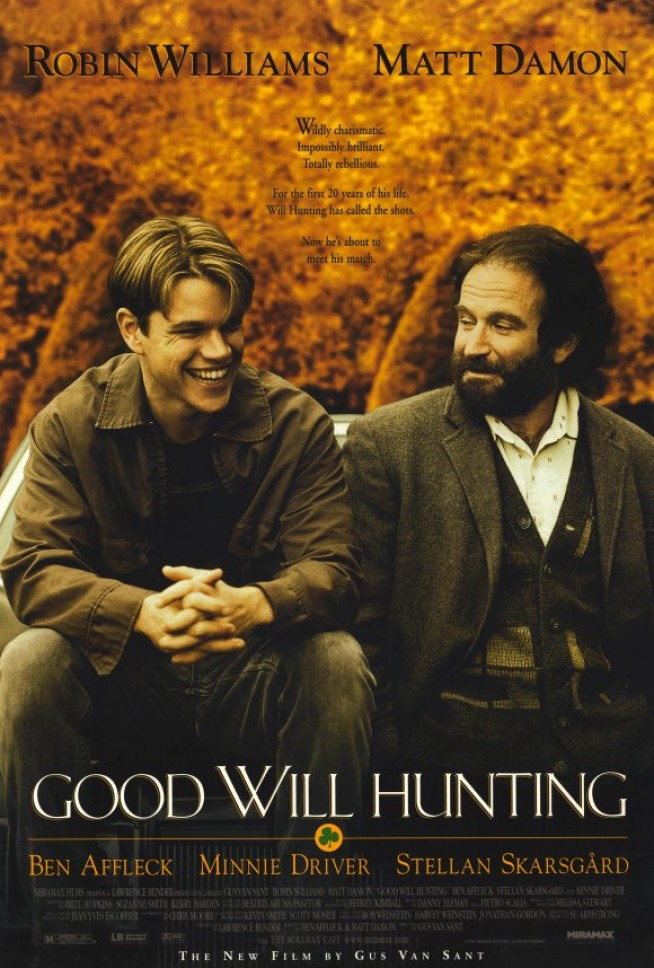
Over the years, this principle led Time for Peace to recognize works and performances as different as Steven Spielberg’s Schindler’s List, for confronting memory, persecution and the possibility of individual moral courage; Robin Williams’ performance as Sean Maguire in Good Will Hunting, for bringing
compassion and human connection to a wounded young life; Hilary Swank’s portrayal of Erin Gruwell in Freedom Writers, where education becomes a path beyond violence and division; and Stevie Wonder’s Conversation Peace, where music itself becomes a language of dialogue.
These artists were not honored because of their names. Their names became part of Time for Peace because of the works being honored. That distinction remains essential.
Time for Peace does not define what an artist should think, say or believe. Nor does it transform art into an instrument for a cause. It recognizes those rare moments when artistic freedom, excellence and a deeper perception of our shared humanity meet.
FROM NEW YORK TO THE WORLD
Although the Awards were born in New York, their journey soon crossed borders.
Ceremonies and Time for Peace initiatives developed in New York, Los Angeles, Paris, London and Brussels, while an international dialogue grew with representatives of the United Nations and European institutions.
Nominations are determined by a committee bringing together professionals from the film and music industries, together with Marion and Robert Einbeck. The nominated works are then submitted to a Jury Committee bringing together approximately 25 to 30 Ambassadors to the United Nations, who
participate in the final selection of the works and artists to be honored
Over the years, personalities from diplomacy, international institutions and the film industry lent their voices and support to the Awards.
Kofi Annan, Secretary-General of the United Nations, accompanied a dialogue in which culture and international understanding could meet.
President Bill Clinton, in messages addressed to the Time for Peace Awards, emphasized the ability of film and music to express the human experience, encourage peace and understanding, and offer younger generations images of what humanity can become.
Thorbjørn Jagland, former Secretary General of the Council of Europe and later Chairman of the Norwegian Nobel Committee, responsible for awarding the Nobel Peace Prize granted his patronage to the European Time for Peace Film & Music Awards, recognizing their connection with human rights, dignity,
tolerance and solidarity.
And from within the international film industry, Dan Glickman, Chairman and CEO of the Motion Picture Association of America, introduced Time for Peace nominations while reflecting on cinema's ability to cross borders and cultures and shape the way we understand one another.
Other voices — from UNESCO to the European institutions — would accompany the journey over the years.
They did not come to define what artists should say. They came because they recognized what art could make possible. The conversation was the same:
what place can culture occupy in helping human beings understand one another?
This encounter between artists and diplomats gave the Awards an unusual dimension. Cinema and music could enter a room with people whose daily responsibility was international dialogue — not to become diplomatic instruments, but to remind everyone that before borders, institutions and differences, there are human stories.
Over the years, this journey brought Time for Peace into dialogue with personalities and institutions from different parts of the world and gave its ceremonies an international resonance far beyond a traditional awards evening.
MORE THAN A CEREMONY
Time for Peace was conceived as more than an awards ceremony. Music, cinema, gastronomy, fashion and visual creation were invited to meet within the same experience — each offering its own language to a shared humanist purpose.
Cinema meets music. Artists meet diplomats. Filmmakers meet musicians, writers, designers, chefs and people from worlds that might otherwise never encounter one another.
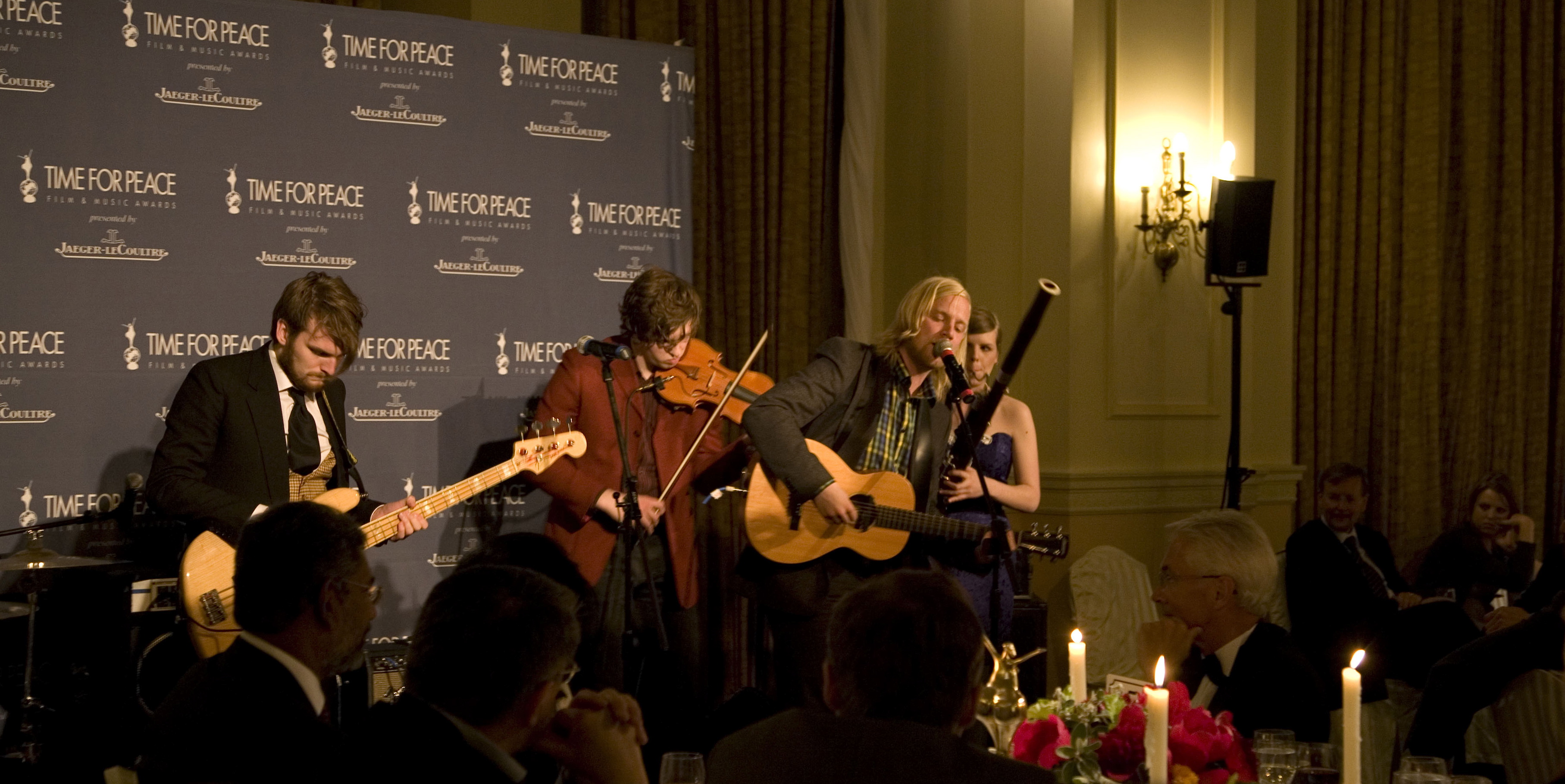
Music is not simply part of the entertainment surrounding the ceremony. It enters into dialogue with the works being honored. At Carnegie Hall, Dave Brubeck and his orchestra performed on an evening honoring Céline Dion and Phil Galdston for Fly. At Lincoln Center, Joshua Bell performed a Kaddish in
connection with Schindler’s List.
The same idea extends to the dinner itself.
Leading chefs invited to Time for Peace are asked not simply to prepare a menu, but to create a Time for Peace recipe — another expression of the evening’s spirit. The first was Paul Bocuse, who created Les Ailes de la Paix, sauce suprême aux morilles fraîches. Other internationally renowned chefs would follow.
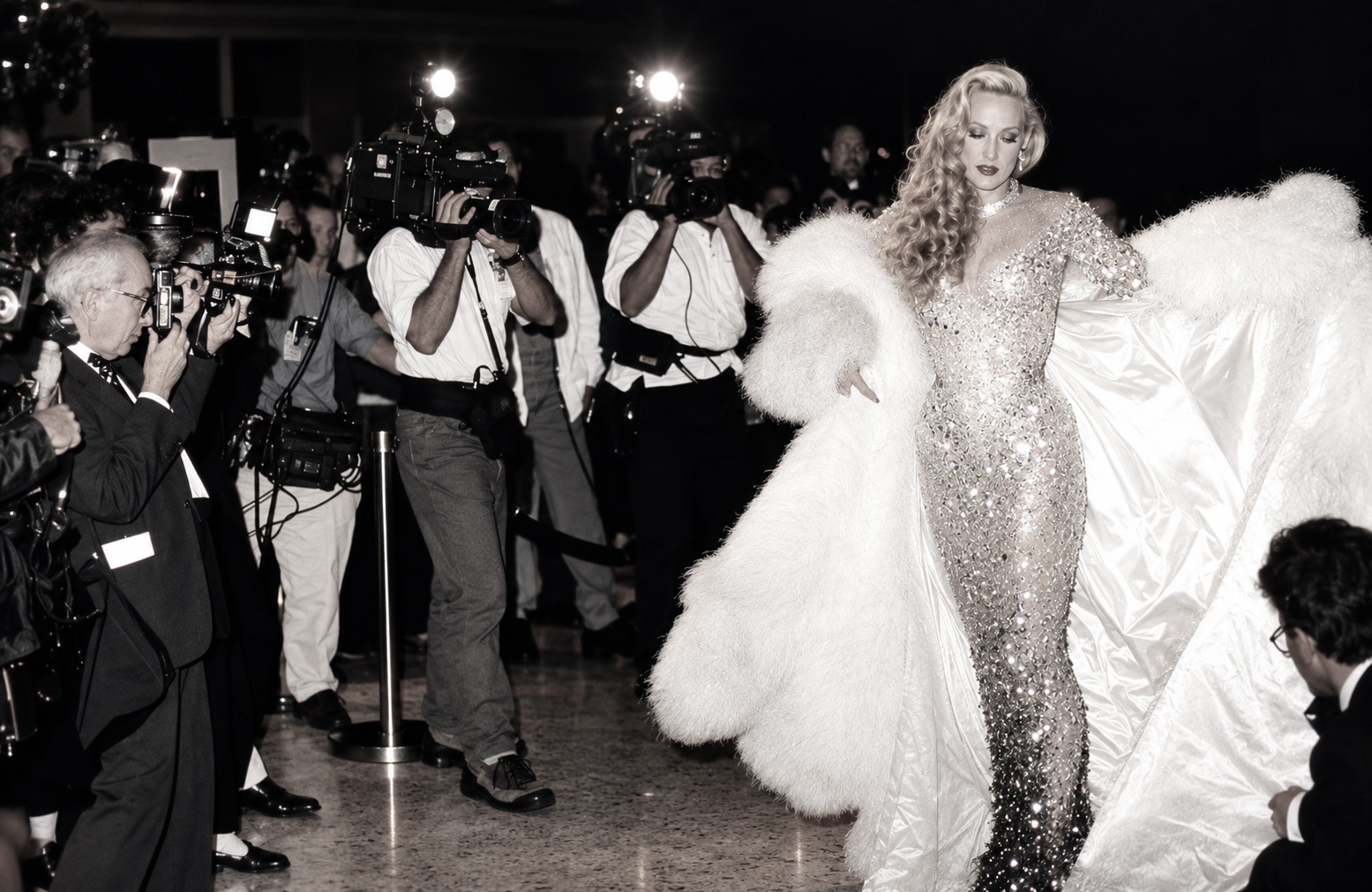
Fashion becomes part of the same creative dialogue. Each year, a leading designer is invited to imagine a unique Time for Peace dress, worn during the ceremony. Yves Saint Laurent created the first, worn by Marisa Berenson, followed in subsequent years by creations from designers including Thierry Mugler, John Galliano and Kenzo.
Music, cinema, fashion and gastronomy are not brought together for spectacle alone.
The intention is to allow different forms of creation to express, each in their own language, something of the humanistic spirit at the heart of Time for Peace.
Time for Peace seeks to create more than an evening around humanistic values. It seeks to make those values perceptible through the arts themselves.
The ceremony is the visible moment.
The encounter is the purpose.
A SHARED JOURNEY
Time for Peace could not have travelled this road alone.
Behind each ceremony is a major international production bringing together artists, diplomats, cultural figures and hundreds of guests — supported by partners who recognize that the Awards offer something different from a traditional film or music ceremony.
They enter a world in which cinema and music meet human values, international dialogue and other forms of artistic creation.
Over the years, international companies and maisons from the worlds of watchmaking, fashion, jewelry, cinema, music, travel and hospitality have accompanied Time for Peace in different ways — from presenting partnerships to creative collaborations and support for individual ceremonies.
Their participation is not simply about placing a name beside an event. It offers partners the opportunity to associate themselves with artistic excellence, human dignity and an international conversation reaching beyond the ceremony itself.
Today, a new chapter creates a much broader journey.
The returning Awards will no longer stand alone. They will be part of a Time for Peace universe that also includes the Screen Portal, the Collector Magazine, Serenity, the Artistic Circle of Humanist Voices, and new initiatives connecting artists, audiences and younger generations.
For future partners, this opens new possibilities: to accompany not simply a single evening, but a living platform developing through cinema, music, culture, education, health and new forms of human encounter.
A partner can do more than place its name beside Time for Peace. It can help make the journey possible. And become part of the story.
WHEN THE WORLD CHANGED
Time for Peace was born in New York in 1994.
Seven years later, the world around it changed profoundly.
The tragedy of September 11, 2001 marked a turning point.
Time for Peace had grown through major Film & Music Awards ceremonies bringing together artists, diplomats, international partners and audiences around cinema, music and humanistic values.
After September 11, the world in which those ceremonies had developed was no longer the same.
Time for Peace changed with it.
Its journey gradually took on new forms, increasingly extending toward Europe — and toward Geneva, Brussels and London — where its original humanistic purpose found new expressions through international dialogue, culture and encounters with diplomats and institutions.
The form was evolving, but the question remained the same:
How can art help human beings see and understand one another differently?
Years later, the global disruption of the Covid-19 pandemic brought another interruption to the presentation of the Awards.
But a pause does not necessarily mean an ending.
Sometimes it creates the space in which a new form can emerge.
ONE PURPOSE – NEW FORMS
During this period of transformation, something broader began to take shape.
The original purpose of Time for Peace had not changed. But the ways of carrying it forward had.
Cinema and music remained at its heart, while new forms began to extend the journey beyond the moment of an Awards ceremony.
The Screen Portal creates a place where significant films and new works can continue to be discovered, discussed and transmitted — including by younger generations — long after their initial release.
The Artistic Circle of Humanist Voices opens another space: one in which artists from different generations, cultures and disciplines can share their voices, reflections and experience freely, without prescribed political alignment.
Serenity carries the humanistic journey into an entirely different environment — the hospital — using immersive artistic experiences around image, color, light, movement and music to offer moments of serenity to hospitalized patients.
And the renewed Time for Peace Collector Magazine brings these worlds together through stories — cinema, artists, places, human encounters and initiatives worth discovering and transmitting.
These are not separate projects gathered under one name. They are different expressions of the same humanistic purpose. Different forms. One humanistic journey.
THE AWARDS RETURN
A NEW CHAPTER – 2027
More than thirty years after their creation, the Time for Peace Film & Music Awards are preparing to return.
Not to reproduce the past. Not to create another awards ceremony in a world already filled with them. But to carry forward, in a new form, the question that gave Time for Peace its reason for being in 1994:
Which stories, images, performances and music help us recognize more deeply what it means to be human?
The world has changed. Cinema has changed. Music has changed. The ways in which stories reach us — and the ways in which audiences encounter them — have changed. But the need for spaces where artistic freedom can meet dignity, empathy, dialogue and human understanding remains.
The returning Awards will therefore belong to a much broader Time for Peace journey — one that begins before the ceremony and continues long after it through the Screen Portal, the Collector Magazine, Serenity, the Artistic Circle of Humanist Voices and new encounters with younger generations.
The Awards will remain a moment of recognition. But recognition will no longer be the end of the journey. It can become the beginning of another.
FROM RECOGNITION TO ENCOUNTER
The return of the Time for Peace Awards will not begin only on the night of a ceremony. It can begin whenever a work creates an encounter.
Building on the original spirit of Time for Peace — when artists, filmmakers, musicians and members of the international diplomatic community came together around works carrying a profound human
dimension — a new series of Time for Peace Encounters is being envisioned.
Each Encounter may begin with a film, a song or another artistic work selected for its artistic quality and humanistic resonance — including works presented through the Time for Peace Screen Portal.
Around that work, artists, filmmakers, members of the international diplomatic and cultural communities, partners, educators and younger generations may be invited to meet, listen and exchange.
These encounters are not intended as political forums, nor to ask participants to adopt a common position. Their purpose is simpler: to allow an artistic work to become the beginning of a human
conversation.
An informal Time for Peace Diplomatic Circle will progressively reconnect with one of the distinctive dimensions of the original Awards: the encounter between art and people engaged in international dialogue. Its members will participate freely and personally, without prescribed political alignment or institutional position, joining selected Time for Peace Encounters when a work, an artist or a human story invites a wider conversation.
Some Encounters may take place around a film entering the Screen Portal. Others may grow from music, Serenity, the Artistic Circle of Humanist Voices or stories carried through the Collector Magazine.
Different places. Different works. Different voices. One encounter at a time.
THE TIME FOR PEACE SONG AWARD
FROM LISTENING TO DIALOGUE
Music has been part of Time for Peace since its earliest years.
From Fly, honored through Céline Dion and Phil Galdston, to Stevie Wonder’s Conversation Peace, the Awards recognized songs not simply because of the artists who performed them, but because of the human experience carried through the music.
In 2027, the Time for Peace Song Award will return with that same principle — but with a new dimension.
A song will not simply be presented to an audience. It will become an invitation to listen.
As in the original Time for Peace process, an initial selection of songs will be proposed by a committee bringing together music professionals and Time for Peace.
The selected works will then travel beyond that committee to an international jury of listeners, progressively bringing together people in participating countries.
Younger generations will have a particular place within this journey. Through universities and other educational encounters, students will be invited not simply to cast a vote, but to listen, exchange and reflect on the ways a song can carry human experience across languages, cultures and borders.
Radio partners, universities, music professionals, cultural institutions and festivals may progressively accompany the initiative, helping the selected songs travel from one audience to another.
The ambition is not to create another popularity contest. It is to listen before choosing. To discover beyond what we already know. To allow music to cross a border before a judgment is made. And to let a song become the beginning of a conversation between people who may live thousands of miles apart.
From audience to participant. From listening to dialogue. From one song to many human voices.


.jpg)